
Iran appoints six new military commanders as expert warns of ‘prolonged confrontation’
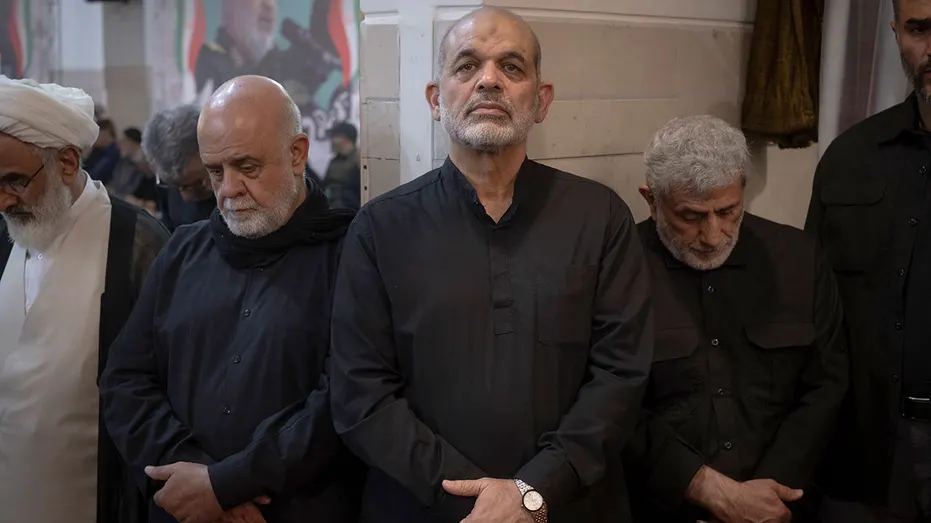
Supreme Leader Mojtaba Khamenei appointed six senior military commanders on Monday, a move a counter-terrorism expert suggests signals that Tehran is preparing for a 'prolonged confrontation' rather than a deal with Washington. The appointments were announced by the Supreme Leader's office and shared on X in English. The changes come as Iranian and Omani negotiators finalise details for a proposed shipping route through the Strait of Hormuz. Omer Mohamed, director of the Antisemitism Research Initiative at George Washington University’s Program on Extremism, told Fox News Digital that the timing of the announcements was deliberate. He stated that Tehran is solidifying its command structure as a 'field reality' before signing any agreement. Under the new orders, Ali Abdollahi has been appointed Chief of the General Staff, with Kiomars Heidari as his deputy. Ahmad Vahidi has been officially named commander-in-chief of the Islamic Revolutionary Guard Corps (IRGC) and promoted to the rank of major general. Mostafa Izadi was appointed deputy commander of the IRGC, Ali Amai as commander of the IRGC Navy, and Hossein Taeb as commander of the Basij. Mohamed noted that Vahidi’s mandate includes maintaining readiness for 'powerful offensive operations against the enemy.' Abdollahi has been tasked with integrating the General Staff into the Khatam al-Anbiya Central Headquarters, the joint wartime command. The expert added that while nations typically dissolve wartime command structures after exiting conflicts, Iran is institutionalising them. Several of the appointees have previously been targeted by US or European sanctions or face allegations related to terrorism and the violent suppression of protests. Ahmad Vahidi is subject to an Interpol Red Notice at the request of Argentina, linked to his alleged role in the 1994 AMIA Jewish centre bombing in Buenos Aires, which killed 85 people. Hossein Taeb, former head of the IRGC Intelligence Organisation and former Basij commander, has been on the US Treasury Department’s sanctions list since 2010. Kiomars Heidari was sanctioned by the US in 2022; the Treasury Department stated he acknowledged his forces' participation in the violent crackdown on the November 2019 protests. The European Union has also sanctioned him. The reshuffle follows a series of US and Israeli strikes that resulted in the deaths of senior Iranian officials. Ali Khamenei, who had served as Supreme Leader since 1989, was killed in a strike on 28 February, and Mojtaba Khamenei was selected as the new leader in March. Ali Larijani, then-secretary of the Supreme National Security Council, and Gholamreza Soleimani, commander of the Basij, were also killed in strikes on 17 March. Meanwhile, questions persist regarding Mojtaba Khamenei’s health and public absence. President Masoud Pezeshkian stated on Monday that he had met with the Supreme Leader for nearly seven hours; Iran International reported this is the second meeting Pezeshkian has publicly disclosed since Mojtaba Khamenei took office. Mojtaba Khamenei has not appeared in public since his selection in March and is rumoured to have been wounded in the 28 February attack that killed his father. Pezeshkian said they discussed the economy, sanctions, and other domestic challenges, with the Supreme Leader emphasising 'unity and cohesion.' However, Mohamed noted that the military restructuring has not yet fully extended to Iran’s intelligence apparatus; the IRGC Intelligence Organisation and its counter-intelligence division lack announced commanders, and Iran remains without permanent ministers of defence or intelligence. He added that accountability for the counter-intelligence failures that allowed for the 'elimination' of the previous leadership in the February attack has yet to be established.