
Analysis: The implications of US allegations against a London-based Muslim Brotherhood figure
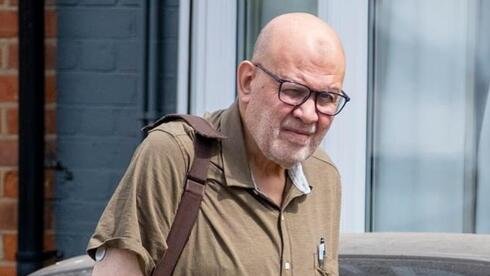
According to a report by Ynet, the US Treasury Department has accused Mahmoud El-Abiary, an Egyptian-Austrian dual national residing in London, of raising funds for Hamas through two sanctioned Turkish charities. Washington further alleges that he collaborated with Muslim Brotherhood groups to provide financial support to Hamas. These claims remain at the level of official US government allegations, and there is no report of a judicial ruling confirming them. El-Abiary has rejected the accusations, describing them as false and baseless. Ynet notes that the Metropolitan Police have not commented on the case, and citing a report attributed to the Daily Mail, indicates that he has not been interrogated. A clear distinction must be made between US administrative sanctions, potential UK investigations, and criminal proof of the allegations. The significance of this case for Britain lies in the gap between US financial action and London's domestic response. While US sanctions can restrict access to international financial networks, they do not replace judicial proceedings in the UK. If British authorities possess independent evidence of terror financing, public accountability regarding the status of any investigation is essential for the rule of law. However, police silence neither confirms nor denies the allegations. The case has reignited long-standing debates regarding the status of the Muslim Brotherhood in the UK. Ynet notes that while Hamas is a proscribed terrorist organisation in Britain, the Muslim Brotherhood is not. Critics, including Robin Simcox, Richard Tice, and Chris Philp, have called for a stricter approach and urgent review. From a security perspective, the alleged links between Muslim Brotherhood networks, sanctioned charities, and Hamas, if proven, could heighten concerns over the misuse of charitable structures. However, organisational ties or institutional management alone are insufficient for definitive conclusions without specific financial and judicial documentation. This limitation underscores the importance of independent verification in cases with significant political and reputational consequences. For Iran and the wider region, this development signals continued US pressure on Hamas-linked financial networks and increased Western sensitivity toward organised Islamist activities in Europe. The primary outcome depends on London's response: whether the UK will launch an investigation based on its own evidence, or if the matter will remain confined to US sanctions and political pressure. Currently, based on the Ynet report, there is no definitive answer. It is also necessary to distinguish between political criticism of the Muslim Brotherhood and the legal proof of Hamas financing. Proscribing an organisation is a significant legal and security decision with broad implications for freedom of association and political activity, which cannot be based solely on an individual case or the statements of political opponents. Until further public evidence is presented, the most accurate assessment is that Washington has levelled a serious accusation, the individual has denied it, and British authorities have yet to take a public stance on any investigation.