
Analysis: Mohsen Rezaei appointment signals continued IRGC influence in security council
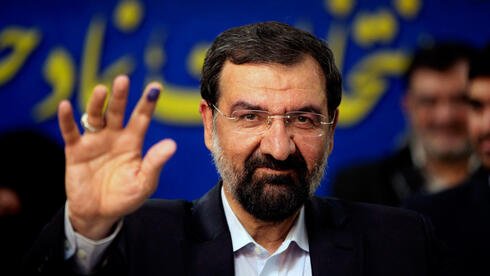
According to a Ynet report, Mohsen Rezaei, former commander of the Islamic Revolutionary Guard Corps (IRGC) and a veteran figure in the Iranian power structure, has been appointed secretary of the Supreme National Security Council by the Iranian president. This appointment follows the resignation of Mohammad Bagher Zolghadr, who had only assumed the role in March and will now serve as a political advisor to the Supreme Leader. Mojtaba Khamenei’s office has also designated Rezaei as its representative on the council. The significance of this change lies in the role of the Supreme National Security Council, which coordinates security and foreign policy. Its members are drawn from senior military, intelligence, and government officials, as well as representatives of the Supreme Leader. However, the report notes that final decision-making authority remains with the Supreme Leader. While the secretary does not unilaterally determine national policy, they can influence the coordination and transmission of decisions between key institutions. Structurally, Rezaei’s appointment underscores the strong link between the IRGC and this coordinating body. Rezaei served as IRGC commander for 16 years and has frequently commented on security issues in state-aligned media. His recent warning regarding Iran's response to a maritime blockade reflects his hardline rhetoric, though the report does not conclude that this appointment signifies a new decision to confront the United States. Danny Citrinowicz, an Israeli researcher and former head of the Iran branch in the Israeli military intelligence research unit, assesses this change as an attempt by Mojtaba Khamenei to increase control over the council. This is an expert analysis cited by Ynet rather than an independently verified fact. Citrinowicz himself emphasized that the background details of the change are unclear, noting that disagreements over policy or personal matters are merely speculative. A more significant hypothesis is the potential revival of the council's role. According to Citrinowicz, the council has lost some of its former importance in recent years, and there may now be an effort to restore it as a more effective decision-making body close to the Supreme Leader. If this assessment is accurate, selecting an individual with a long military background could signify a strengthening of security coordination within the power structure, though the report provides no direct evidence regarding an increase in the council's authority. Regarding diplomacy, Citrinowicz considers it unlikely that Rezaei’s appointment will alter Iran’s stance in negotiations with the U.S., even if the council’s influence is bolstered. This assessment suggests caution: changing the council secretary, without an official policy shift, is insufficient to conclude that the trajectory of negotiations has changed. The primary impact of this development, based on available information, appears to be within the internal arrangement of power and the weight of military institutions, rather than a new foreign policy declaration. Zolghadr’s transfer to the role of political advisor indicates that he has not been entirely removed from the power structure. Nevertheless, the motivation for this decision remains unknown. The cautious conclusion is that Rezaei’s appointment signals the continued role of the IRGC in security coordination and a potential effort to strengthen the council, but a distinction must be made between expert analysis and proven facts regarding Mojtaba Khamenei’s control, internal disputes, or the practical consequences for negotiations.