

Analysis: US delays potential strike on Iran – Tehran’s opportunity or Washington’s electoral calculation?
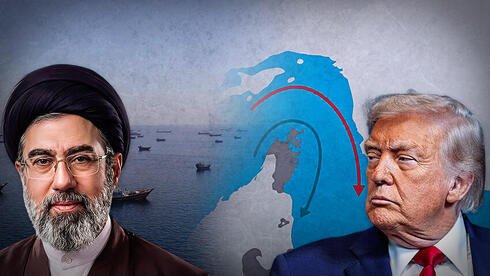
In an analysis for Ynet, Boaz Hezni writes that the repeated delay of a potential US strike on Iran could backfire, providing the Islamic Republic with an opportunity to spark a fresh crisis in the Persian Gulf ahead of US midterms. The report emphasises that this assessment represents the author's analysis rather than an official announcement regarding the US government's final decision or a definitive Iranian plan. According to Ynet's account, US President Donald Trump has issued threats regarding a massive strike on Iran in recent weeks, but subsequently spoke of postponing the operation. The publication also notes that Iran has rejected a deal, following which another vessel was targeted in the Strait of Hormuz. In the author's view, this chain of events could form a cycle of military response, escalation and further delay, though this scenario has not yet been proven to materialise. Hezni suggests several potential reasons for Trump's behaviour, including concerns over oil prices, the impact of war on the World Cup and the US semiquincentennial celebrations, and midterm election considerations. Among these factors, the author highlights the role of petrol prices, arguing that rising fuel costs could harm the ruling party in the US. From this perspective, delaying the strike is not necessarily a sign of strategic change, but an attempt to manage time and the political cost of the crisis. This part of the analysis underscores the direct link between Persian Gulf security and US domestic politics. Any serious disruption to energy supplies or threat against the Strait of Hormuz could pressure the oil market and influence American voters. However, the Ynet text provides no independent evidence to prove that Washington's goal is deliberately to use Iran to strengthen its dominance over the global energy market; this proposition is presented as the author's analytical view rather than an established fact. The article's main warning is that a 'controlled escalation and de-escalation' could ultimately slip out of the control of its designers. Repeated delays could diminish the credibility of the US military threat, worry Washington's Gulf allies and affect US relations with Israel. These consequences are raised in the text as strategic concerns, though their realisation depends on the behaviour of actors and subsequent events. Ynet's electoral scenario is based on the premise that Tehran could manufacture a fresh crisis in the Persian Gulf roughly two weeks before the election to push up oil prices and pressure Republicans. This claim regarding the Islamic Republic's capability, intent and potential timing is the author's prediction, and the report provides no independent proof of such a definitive action. Analytically, the significance of this scenario is that any military crisis in the Persian Gulf is not merely a regional issue, but can directly spill over into the US economy and domestic politics. For Iran, the practical implication is clear: postponing a potential strike may provide diplomatic and operational breathing room, but any action in or around the Strait of Hormuz simultaneously increases the risk of a surge in energy prices, intensified international pressure and the formation of a broader military coalition. Therefore, even if Washington's electoral considerations are real, they do not automatically mean reduced risk for Iran; instead, they indicate that the timing of a crisis can be as decisive as the crisis itself.