
Israeli diplomats meet settler leader: Symbolic gesture or policy shift?
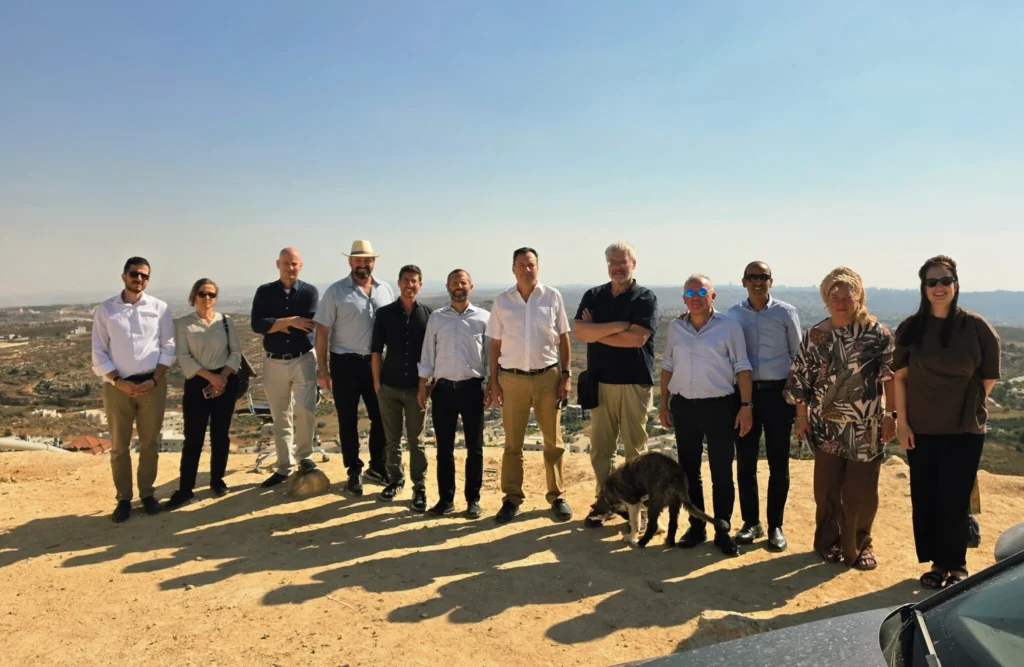
The Times of Israel reported that public diplomacy staff from the Israeli Foreign Ministry met with Yisrael Gantz, head of the Yesha Council, during a visit to the West Bank on Sunday, 11 August. Yaakov Livne, the ministry's senior deputy director-general for public diplomacy, shared an image of the meeting, describing the West Bank as 'Judea and Samaria' and the 'heart of the Land of Israel'. The report clarifies that the Foreign Ministry has not officially framed this meeting as a sign of government support for the settlement project. Factually, this remains a meeting and a series of public statements rather than a formal announcement of new construction or annexation policies. While the presence of public diplomacy officials alongside the settler leader carries political weight, any further conclusions remain speculative. Public diplomacy is tasked with shaping a government's narrative for foreign audiences. When officials speak of 'seeing the region up close and telling its story to the world', it suggests that settlers and the disputed geography are becoming part of Israel's official international narrative, even if this does not constitute a legal or administrative change. Most of the international community considers Israeli settlements in the West Bank to be contrary to international law, a position Israel rejects. Critics argue that settlement expansion undermines the viability of a future Palestinian state. Any move to normalise the settlement narrative could impact the diplomatic climate, though the extent of this effect remains unclear without further information on government decisions or the reactions of foreign partners. For Iran, the significance of this development is primarily regional. The normalisation of the settlement narrative could exacerbate tensions between Israel and the Palestinians, potentially complicating the Middle East security environment. However, the report provides no evidence linking this meeting to specific decisions regarding Iran, military operations, or regional power balances. Separately, the report notes Reuters' coverage of renewed attacks by Iran-aligned Houthis on the Red Sea port city of Al-Mukha, with the Yemeni military reporting the interception of several drones. As there is no stated link between these attacks and the meeting with the settler leader, these developments should be analysed as distinct events.