

Analysis: Why Israel’s security perimeter now extends to the Gulf
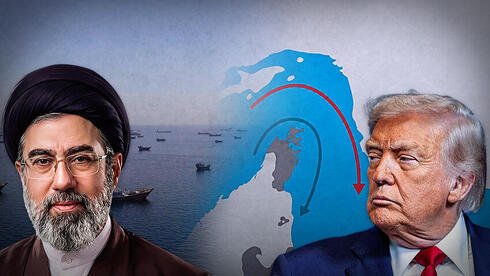
Policy analyst Amine Ayoub, writing for Ynet, argues that the August 13–14, 2026, attacks on commercial vessels linked to the Abu Dhabi National Oil Company (ADNOC) in the Strait of Hormuz represent a pattern of state-backed economic coercion and maritime piracy. The UAE Ministry of Foreign Affairs explicitly attributed these strikes to Iranian forces and the IRGC. The analysis suggests that the security of the Persian Gulf and the protection of Abraham Accords partners are no longer distant concerns for Israel, but rather a vital maritime flank in a shared effort to counter Iranian asymmetric projection.
The report notes that the Strait of Hormuz, which facilitates 20 percent of global oil transit, is highly vulnerable to asymmetric threats such as UAVs and anti-ship missiles due to its narrow geography. Bahrain has condemned the strikes, citing the UN Convention on the Law of the Sea and UN Security Council Resolution 2817. Conversely, Tehran has not acknowledged direct responsibility, characterizing its naval operations as enforcement of maritime protocols against non-compliant vessels.
The analysis asserts that Iranian maritime operations in the Gulf are inseparable from the actions of Tehran-backed proxies along Israel’s borders, as both operate under a unified IRGC doctrine. The author argues that the 'hedging' strategy pursued by Gulf states—combining diplomacy with domestic defense—has reached its limits due to a lack of robust physical deterrence. Ayoub contends that countering these low-signature threats requires enhanced Maritime Domain Awareness (MDA) and rapid multi-sensor intelligence fusion.
Finally, the piece highlights that Israel’s 2021 transfer into the US Central Command (CENTCOM) area of responsibility has catalyzed operational coordination with the UAE and Bahrain. The author concludes that by providing specialized defensive and radar support, Israel has become a functional layer in a regional security architecture, effectively extending its strategic perimeter to the vital sea lanes of the Persian Gulf.