

Israeli Supreme Court hears challenge over removal of care home polling stations
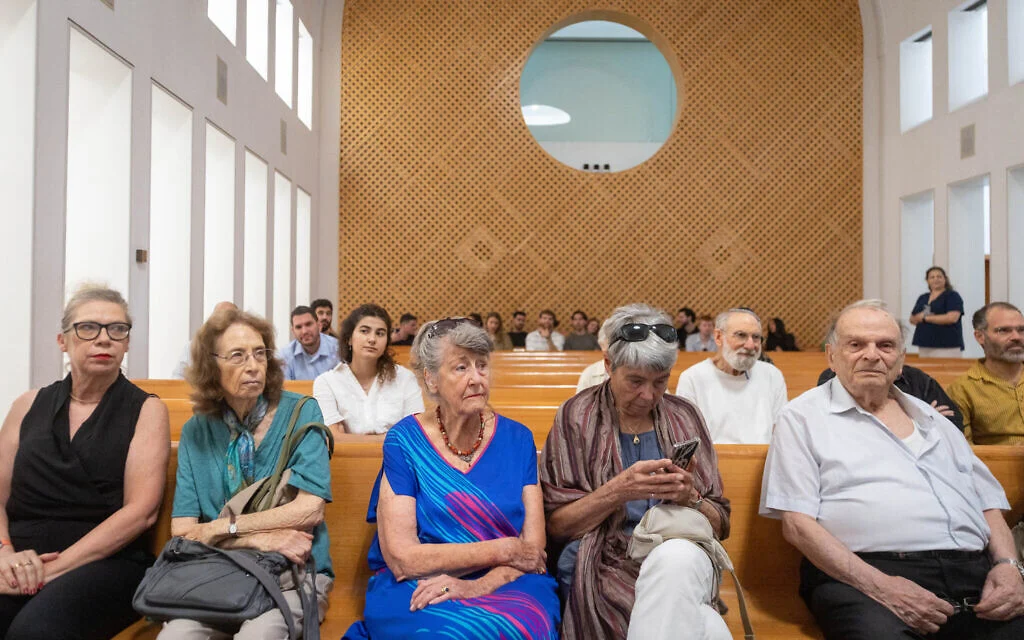
The Israeli Supreme Court heard a petition on Tuesday regarding the Knesset's decision to repeal the requirement for polling stations in care homes and assisted living facilities. Petitioners argue that removing these stations violates the rights of residents who struggle to reach external polling stations due to age or physical disability. The case was brought by 56 care home residents against the Knesset, the Central Elections Committee, and the Attorney General, who is representing the government. Several advocacy groups have joined the petition. The respondents argue that the matter falls outside the court's jurisdiction. Yuval Wenger, head of the Israeli Accessibility Center, told Haaretz that 50 percent of the elderly population has a disability, describing the decision as effectively targeting a specific segment of society. Supreme Court Justice Isaac Amit, a former head of the Central Elections Committee, expressed scepticism regarding the Knesset's move, noting that previous arrangements had functioned effectively in past elections. Israel first introduced polling stations in non-nursing care facilities during the 2021 Knesset elections due to the COVID-19 pandemic. That scheme applied to facilities with at least 30 residents. The measure was repeated in the 2022 elections, though the threshold was raised to 75 residents. The current repeal affects assisted living and residential care homes, but excludes nursing homes, which—like hospitals—already have mobile polling stations. Oded Forer, a member of the Knesset Constitution, Law and Justice Committee, estimated that between 35,000 and 37,000 people would be affected—a figure roughly equivalent to the number of votes required for a Knesset seat. Forer’s party, the secular right-wing Yisrael Beiteinu, may be disadvantaged by the removal of these stations. The move coincides with efforts by the governing coalition to expand voting rights for approximately 200 individuals serving abroad, a group reportedly likely to support the coalition. Opposition members have challenged this proposal. According to Haaretz, the Central Elections Committee had recommended retaining the care home polling stations, but the Knesset rejected the proposal. However, a representative for the Committee told the court that it is working with care homes to establish polling stations voluntarily, even without a legal mandate. Hebrew media reports indicate that agreements have been reached with roughly half of the facilities. Petitioners argue that without a legal requirement, some facilities are refusing to host stations due to concerns over the influx of non-resident voters on election day. Yonatan Berman, representing the state, acknowledged the difficulty of resolving concerns for the remaining facilities before the election, stating that ad-hoc solutions for each home are challenging. The court has yet to issue a final ruling.