Former Mossad chief claims Israeli agents repeatedly visited Fordow nuclear site
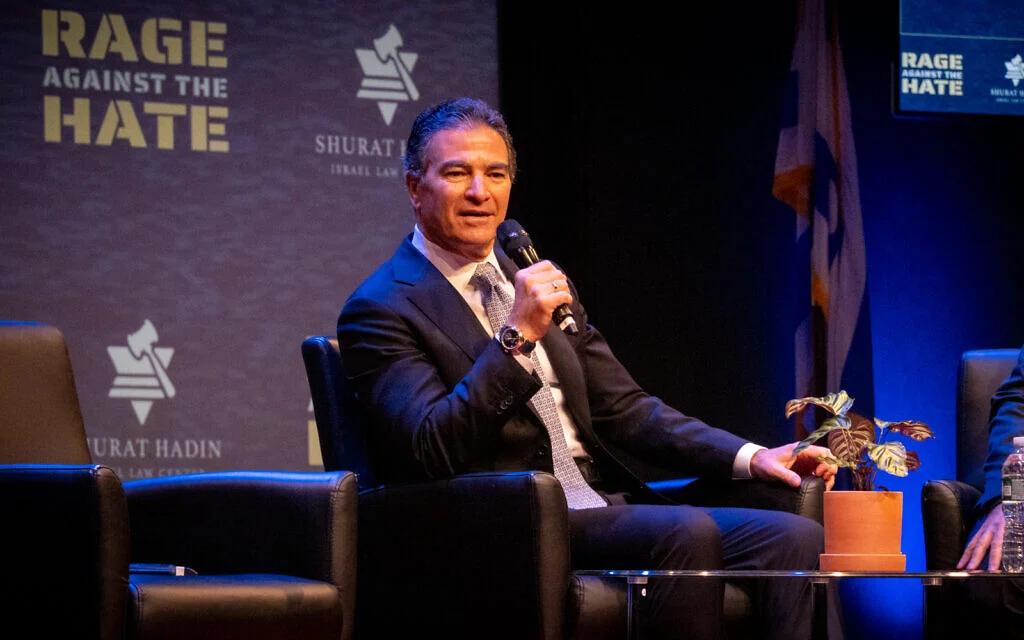
Former Mossad director Yossi Cohen said on Tuesday that Israeli agents have visited Iran’s Fordow uranium enrichment facility multiple times in the past. Cohen made the remarks at the Galilee Forum in Safed, though he provided no details regarding the timing of these visits or the identities of those involved, according to Hebrew media reports. Cohen stated, 'We visited the Fordow nuclear site many times to understand it,' adding that a US bombing of the facility would have been 'the fulfillment of all my wishes.' Fordow, along with facilities in Isfahan and Natanz, sustained heavy damage during the 12-day Israel-Iran war in June 2025. Reports suggest approximately 440 kilograms of highly enriched uranium stored at the site were buried under rubble. However, Israel reportedly believes Iran managed to transfer some of this material to the 'کلنگ گزلا' site near Fordow after the conflict. کلنگ گزلا was not targeted in that war or the most recent conflict, though US President Donald Trump has repeatedly threatened to bomb it. Cohen also claimed that '60 percent enriched uranium is still a long way from a bomb.' This assessment appears to contradict experts such as David Albright, who argues that 60 percent enriched uranium could be processed to weapons-grade levels within weeks or even days under the right conditions. Iran had been enriching uranium to 60 percent prior to last year’s attacks—a level far exceeding civilian needs and close to the 90 percent required for nuclear weapons. Last year, Trump claimed the June 2025 operation had 'completely destroyed' Iran’s nuclear capability and set the program back by decades, though the exact extent of the damage remains unclear. In a January report for Israel’s Channel 12 investigative program 'Uvda,' Cohen said Israel first learned of Fordow’s activities in 2010. He stated that Mossad subsequently developed an extensive operational plan that, had it been executed, would have been the 'greatest operation in the country's history.' The plan faced skepticism due to the massive resources required, high complexity, the need for precise coordination, the large number of personnel involved, and the difficulty of extracting agents from Iran. Mossad preferred using its own personnel rather than foreign-recruited agents, which further complicated the operation. Cohen noted that the plan required at least several dozen people. Prime Minister Benjamin Netanyahu reportedly supported the plan and pushed for continued preparations. However, by the time Cohen took over as Mossad chief in 2016, the nuclear deal between the Obama administration and Iran had been signed, and Cohen said he lost his previous confidence in the feasibility of the operation. The plan was eventually shelved in favour of preparing the Israeli military for a direct strike on Iran. The Prime Minister’s Office responded to reports regarding the plan by stating, 'Plans to attack [Fordow] were prepared, some of which could not be executed due to October 7,' without providing further details. Since leaving his post in 2021, Cohen has disclosed details of Mossad operations against Iran’s nuclear program in television interviews. He has implied Mossad’s role in sabotaging underground centrifuge facilities at Natanz, detailed the 2018 theft of Iran’s nuclear archive from a Tehran warehouse, and confirmed that the late Iranian nuclear scientist Mohsen Fakhrizadeh had been a long-term target. Cohen stated that the Islamic Republic must understand that Israel is serious in its pledge to prevent Iran from obtaining nuclear weapons. In the same 'Uvda' program, he claimed deep familiarity with Iran’s nuclear sites, stating that if he had the opportunity, he would take journalist Ilana Dayan to the underground section of Natanz where 'the centrifuges were spinning.'