
Deep underground: How well protected are Iran’s missile cities?
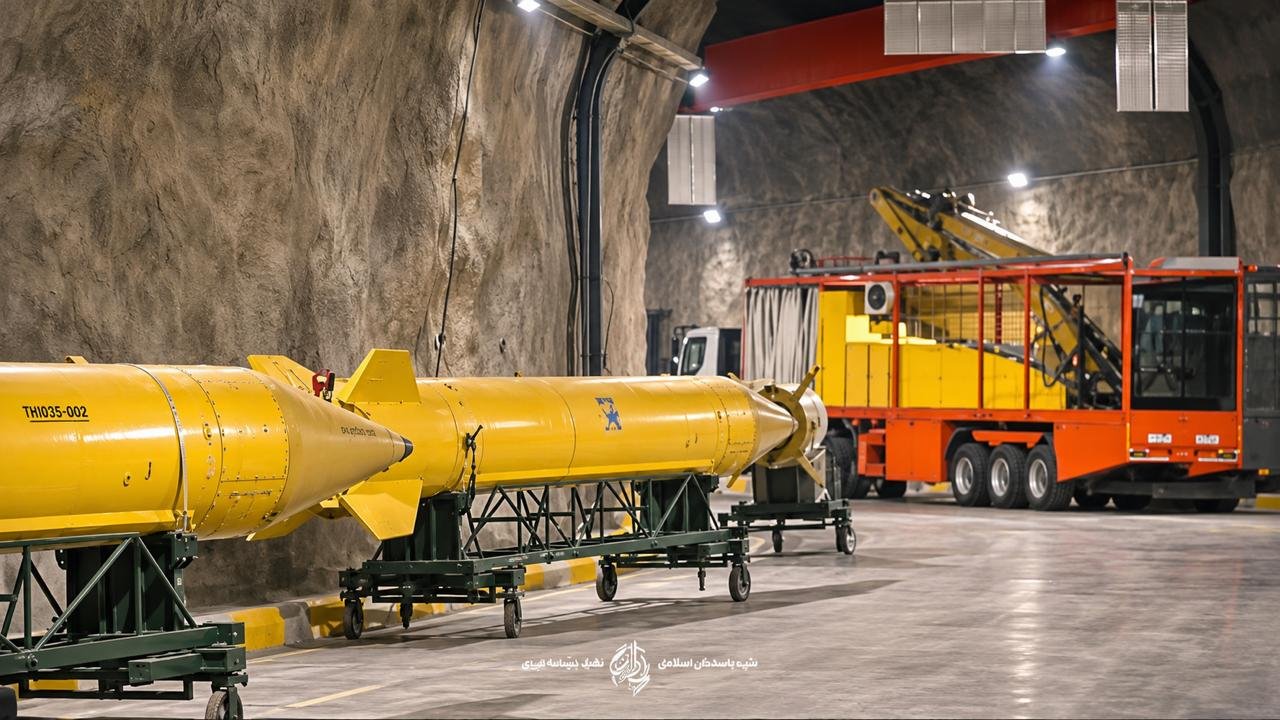
According to Channel 14 Israel, Iran continues to prepare for the possibility of another military conflict with Israel and the United States. Recently, the Islamic Revolutionary Guard Corps unveiled a new underground facility dubbed a missile city, displaying ballistic missiles, cruise missiles, and launch systems. The Iranian Tasnim News Agency published footage of senior military officials, including Ali Abdullahi and IRGC Aerospace Force Commander Majid Mousavi, touring the vast underground complex. The exact location of the facility and the volume of stored weaponry were not disclosed. Beyond storage, statements by IRGC officials such as Hossein Mohebbi indicate that Tehran is attempting to move weapon and drone production lines underground to ensure military activities continue under prolonged bombing. However, the published footage does not prove that active production lines operate within the facility or that they can function under attack. Meanwhile, Western intelligence assessments cited by Bloomberg indicate that Iran has continued to rebuild its missile array, producing approximately 50 ballistic missiles a month—half its pre-war production rate—and likely retaining at least 1,700 ballistic missiles. Despite these estimates, experts emphasize that the survivability and immunity of these underground missile cities depend on geological structures, protective layer thickness, and design, and without precise intelligence or independent evidence, their true vulnerability to airstrikes cannot be definitively assessed.