

Unprecedented Danube Water Levels Reveal Nazi Warships
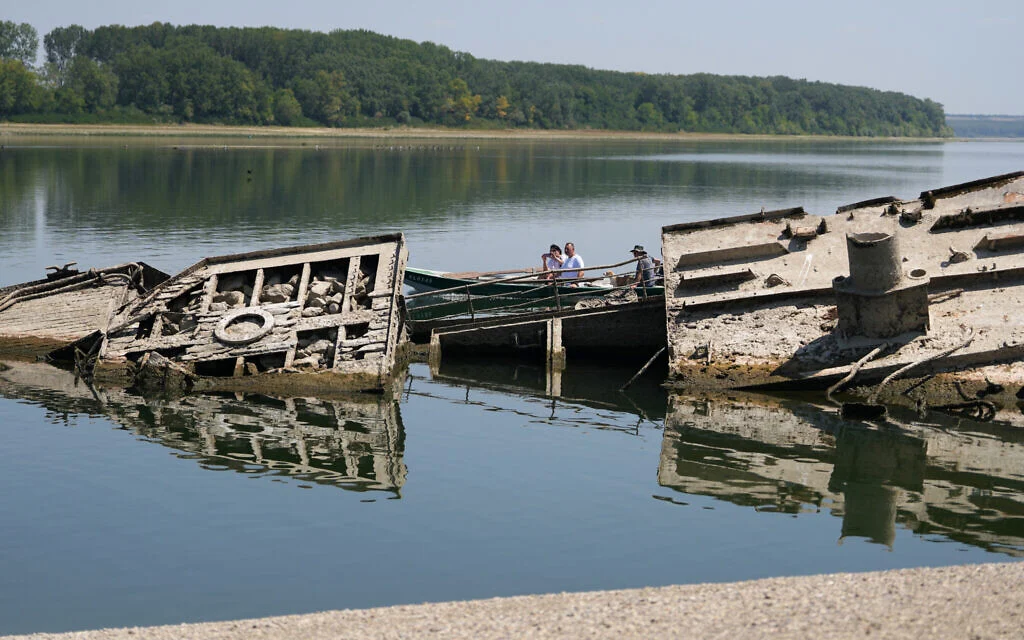
Prahovo, Serbia — Falling water levels on the Danube River caused by drought have exposed the hulls of dozens of Nazi German warships that were deliberately scuttled near the Serbian-Romanian border at the end of the Second World War. Near the port of Prahovo and within a bottleneck of the Danube, the rusted hull and broken mast of one of these vessels have emerged from the water, marking a spot where the Nazi flag once flew. Some of these ships still carry weapons and explosives. These vessels formed part of Nazi Germany's Black Sea fleet. German forces scuttled them near Prahovo in September 1944 during their retreat from Romania as the Soviet army advanced across Europe, intending to block the river route and slow the Soviet advance into the Balkans. Historians say the number of sunken vessels may reach 200. Nazi Germany surrendered a few months later, in May 1945. The exposure of these wrecks has once again drawn attention to the long-standing efforts by the Serbian government, financially supported by the European Union, to clear them from the Danube. Officials of the Socialist Federal Republic of Yugoslavia previously removed a number of the ships from the river, but most remain on the Danube bed due to the presence of explosives. The drop in water levels has now made navigation hazardous on the Danube, a river that flows through 10 countries. Power plants in parts of Central and Eastern Europe have also been pushed to the verge of halting operations, prompting governments to initiate measures to save electricity. Krista Brandić, a resident of Prahovo, said the drop in water has virtually halted boat traffic: "As you can see, large ships can no longer pass." Experts have linked the unusual heat to global warming and other factors. Meanwhile, the German War Graves Commission announced that a military motorcycle belonging to the German military has also been found on the banks of the Danube in Budapest, opposite the Hungarian Parliament building.