

Syrian Court Sentences Bashar al-Assad and Nine Officials to Death
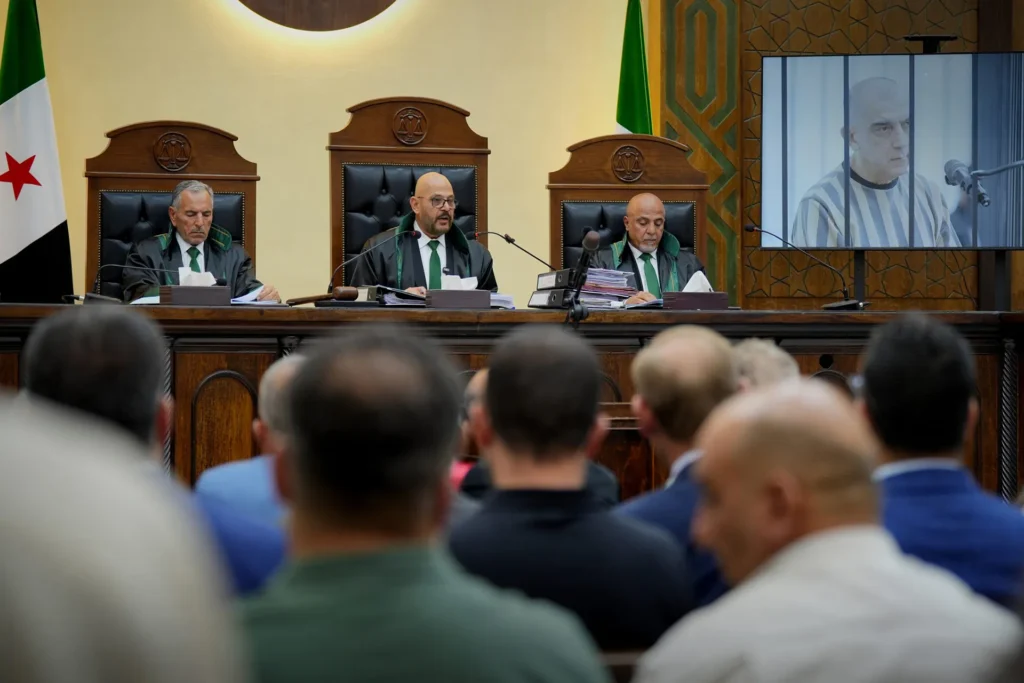
On Tuesday, 11 August, the Fourth Criminal Court of Syria sentenced former President Bashar al-Assad, his brother Maher al-Assad, Atef Najib, and six other security and military officials of the ousted regime to death. According to Al Jazeera and Syrian media reports, the verdict against Atef Najib was delivered in person, while the sentences for the other defendants were issued in absentia. Fadel Abdul Ghany, director of the Syrian Network for Human Rights, described the ruling as a significant step toward ending the impunity that characterised the Assad regime for decades. He told the media outlet 'Syria Now' that this case shifts the handling of crimes against humanity and war crimes from documentation to a national judicial framework. Abdul Ghany added that the sentences hold symbolic importance for victims and their families and may help reduce social tensions, though their credibility depends on the publication of the full text of the ruling, the court's jurisdiction, the evidence cited, and the legal basis for criminal liability. He noted that the sentences are subject to appeal and suggested that the death penalty be limited to the 'most serious offenders' during the transition to mitigate international repercussions. Syrian Minister of Justice Mazhar al-Wais stated that the case will be referred to the Court of Cassation, the country's highest judicial authority, and that defendants have a maximum of 30 days to appeal. He asserted that the death penalty is a matter of national sovereignty and does not conflict with international law, maintaining that the Syrian government is upholding legal guarantees in transitional justice trials. Civil society activist Fawaz al-Khawaja noted that the ruling was expected and significant for those affected, particularly the families of victims. He emphasised that the verdict is not yet final and that the public prosecutor is legally required to appeal all death sentences. Regarding Atef Najib, al-Khawaja stated that despite the serious charges, the judicial process must protect human life and the rights of the accused. Mohammad Ali al-Tawil, head of the Syrian Bar Association, described the death sentences as a 'historic event' in the Syrian judicial process. He told the state news agency SANA that the rulings were not the result of momentary anger or revenge, but the outcome of a legal process honouring victims of years of repression. He added that in the 'new Syria,' no official or power will be above the law. Radif Mustafa, director of the Accountability and Justice Department at the National Transitional Justice Board, spoke of the board's close cooperation with the judiciary and the complete independence of the courts. He stated that transitional justice in Syria must be comprehensive rather than selective or vengeful. He added that for the first time in Syria, the Fourth Criminal Court used international standards to define charges and employed confidential, protected testimony for both the prosecution and the defence. The court convicted Bashar al-Assad of the premeditated murder of several individuals, including children, as well as torture, arbitrary detention, and crimes against humanity. Maher Hafez al-Assad, Fahd Jassim al-Freij, Mohammad Ayman Ayoush, Luay Ali al-Ali, Qusay Ibrahim Mayhoub, Wafiq Saleh Nasser, and Talal Fares al-Issami were also sentenced to death in absentia for premeditated murder, torture leading to death, and other crimes. The court declared that the charges against Atef Najib, based on investigations and witness testimony, constitute crimes against humanity.