US conditions threaten to stall Saudi nuclear deal
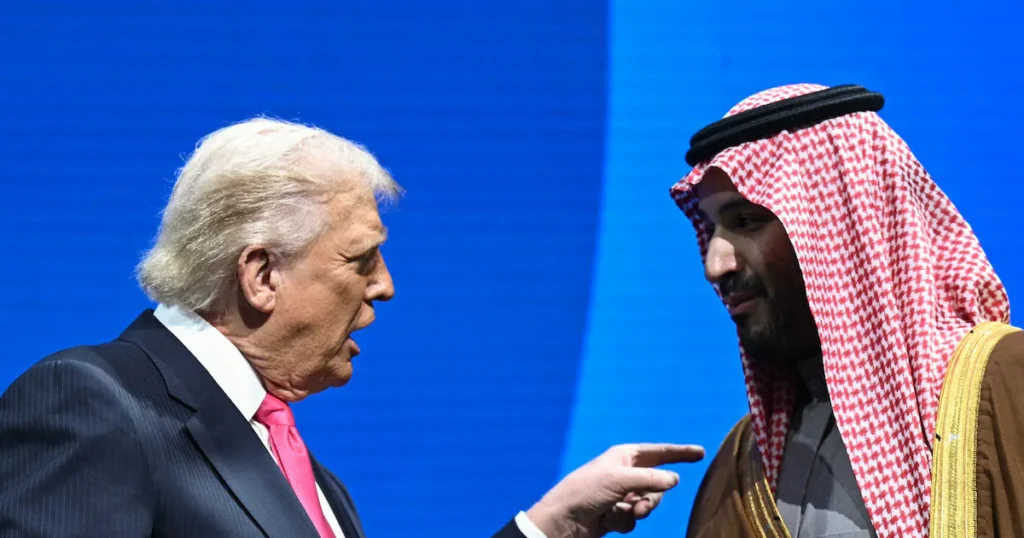
The US-Saudi nuclear cooperation agreement, signed in the final week of July, remains shrouded in uncertainty. Reports suggest a '123 Agreement' could permit Riyadh to enrich uranium; however, former President Donald Trump immediately stated that 'there will be no enrichment of [nuclear] material.' This contradiction has left the future of the deal and its implications for the global non-proliferation regime unclear. A 123 Agreement is the legal framework for US civil nuclear cooperation with other nations, named after a section of the 1954 Atomic Energy Act. Iran was among the first recipients of such cooperation in 1957 under the Eisenhower administration's 'Atoms for Peace' programme. In 1974, the Shah of Iran invested over $1.18 billion in Eurodif, a European uranium enrichment consortium, viewing nuclear energy as both a future power source and a symbol of national modernisation. While Iran ordered an ambitious set of nuclear plants from German and French firms, only the Bushehr plant was completed—decades later, with Russian assistance. It currently supplies less than one percent of Iran's electricity and has been targeted in recent regional conflicts. Following the 1979 revolution, Iran’s cooperation with Eurodif collapsed. Despite receiving compensation, Tehran continues to cite this case as a reason for distrusting foreign enrichment services. Conversely, critics argue that Iran’s pursuit of enrichment levels exceeding civilian power needs signals an intent to develop nuclear weapons capabilities. The UAE adopted a different approach for its civil nuclear programme, signing a 'gold standard' agreement with the US in 2009 that prohibits uranium enrichment and spent fuel reprocessing—two pathways that can lead to weapons-grade material. The Barakah plant was built by a South Korean firm using the APR1400 design, which incorporates significant US technology, with Westinghouse serving as a key contractor. Saudi Arabia has expressed interest in nuclear energy since the 1960s. The King Abdullah City for Atomic and Renewable Energy, established in 2010, once aimed to produce approximately 17 gigawatts of nuclear power by 2032. While Riyadh initially viewed nuclear energy as a solution to rising domestic oil consumption, the rapid growth of solar and wind power, coupled with the development of gas fields, has reduced the urgency for nuclear capacity. In 2023, Saudi Energy Minister Prince Abdulaziz bin Salman stated that the Kingdom intends to develop the 'entire nuclear fuel cycle,' from uranium ore concentrate to domestic fuel production and export. Although Saudi Arabia possesses significant uranium deposits, questions remain regarding the ore grade and the economic viability of extraction. Riyadh’s insistence on maintaining an enrichment option has led to multiple revisions of the size and location of planned reactors. Saudi Arabia has five primary options for a nuclear partner: the US, South Korea, France, China, and Russia. Cooperation with the US requires a 123 Agreement, and even the use of South Korean APR1400 reactors is complicated without such a deal due to the design's reliance on US technology. South Korea is considered a strong political and technical candidate, and in January 2025, KEPCO reached an agreement with Westinghouse to resolve an intellectual property dispute. France’s nuclear industry capacity has declined, with new projects facing delays and cost overruns. While Rosatom is building plants in Egypt and Turkey, cooperation with Saudi Arabia would be politically sensitive given the war in Ukraine, particularly as Gulf states have noted Russia’s military support for Iran. China has extensive experience building domestic reactors but has primarily succeeded abroad in Pakistan and would likely face strong US opposition to leading the Saudi programme. Washington is simultaneously attempting to revitalise its own nuclear industry, focusing on small modular reactors (SMRs). Foreign orders are essential for this sector, and the wealthy Gulf states represent a significant market; the UAE and Bahrain have already expressed interest in SMRs. However, if the US continues to stall negotiations, Riyadh may eventually turn to one of Washington’s competitors. Uncertainty deepened after Trump, appearing to walk back his previous stance on enrichment, stated that the deal 'will be approved' but is strictly conditional on Saudi Arabia joining the 'highly respected and successful Abraham Accords.' Normalisation between Saudi Arabia and Israel is not currently on Riyadh’s immediate agenda, and the mutual defence agreements signed by Saudi Arabia with Turkey and nuclear-armed Pakistan on Friday suggest a different strategic path. According to The National, allowing Saudi Arabia to enrich uranium would face intense opposition in Washington and Tel Aviv and could undermine non-proliferation efforts. Iran might leverage such a concession in regional negotiations, and other nations with existing 123 Agreements might seek to renegotiate their terms. Conversely, US insistence on a total ban on enrichment or a requirement for normalisation with Israel could collapse the current deal, damage Washington’s credibility, hinder US nuclear technology sales, and cede ground to China and Russia. The core challenge for the US remains bridging the gap between commercial interests, geopolitical considerations, and non-proliferation goals.