
Mohsen Rezaei appointed as secretary of Iran’s Supreme National Security Council
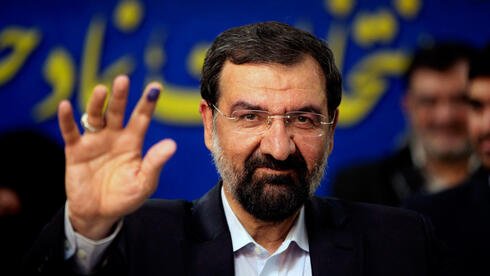
Mohsen Rezaei, a former commander of the Islamic Revolutionary Guard Corps (IRGC) and a close ally of the Supreme Leader of the Islamic Republic, has been appointed as the secretary of the Supreme National Security Council by decree of the Iranian president. Mehdi Tabatabai, the president's communications assistant, announced the appointment on Sunday evening, and Iranian state media subsequently confirmed it. This change follows the resignation of Mohammad Bagher Zolghadr and his transfer to a new position. Zolghadr had only been appointed to the Supreme National Security Council secretariat in March following the death of Ali Larijani. The office of Mojtaba Khamenei, the Supreme Leader, also announced that Mohsen Rezaei will serve as his representative on the Supreme National Security Council, while Mohammad Bagher Zolghadr will act as the Supreme Leader's political adviser. The Supreme National Security Council is one of the most important institutions in the Islamic Republic and is responsible for coordinating the country's security and foreign policy. Its members are chosen from among senior military, intelligence and government officials as well as representatives of the Supreme Leader; however, the final decision on matters of state rests with the Supreme Leader. Mohsen Rezaei served as the commander of the IRGC for 16 years from 1981 to 1997 and remains a well-known figure within Iran's power structure. In recent months, he has repeatedly commented in state-aligned media, warning last week that if the United States does not change its behavior, Iranian forces will not "sit idly by" in the face of the continued naval blockade of Iran. Beni Sabti, former head of the Iran desk in the research department of Israel's military intelligence and a senior researcher on the Iran and Shia axis program at the Institute for National Security Studies, described Rezaei's appointment as a sign of an effort by Mojtaba Khamenei to increase his control over the council. He stated that the Supreme National Security Council has lost some of its former importance in recent years, and an effort is now underway to revive it as an institution that assists the Supreme Leader in decision-making. Sabti suggested that Zolghadr's performance may have met with dissatisfaction, though he emphasized that the behind-the-scenes details of the change remain unclear. According to him, Zolghadr may not have been aligned with the current positions of the Islamic Republic's leaders, or personal disagreements may have played a role in the decision. He added that this appointment is unlikely to change Iran's stance in negotiations with the US, although it could strengthen the Supreme National Security Council. The researcher also noted that Rezaei's background in the IRGC will preserve the close ties between the Revolutionary Guards and the Supreme National Security Council. He added that Rezaei has previously served as an adviser to Ali Khamenei and has "in a sense" acted as a mentor to Mojtaba Khamenei. Sabti stated that Zolghadr's transfer to an advisory role may be aimed at keeping him within the power structure—a method he said Ali Khamenei has also used in the past to keep individuals close and prevent them from leaving the system.