

Haaretz: Israel-Hezbollah rules of engagement transformed since 2006 war
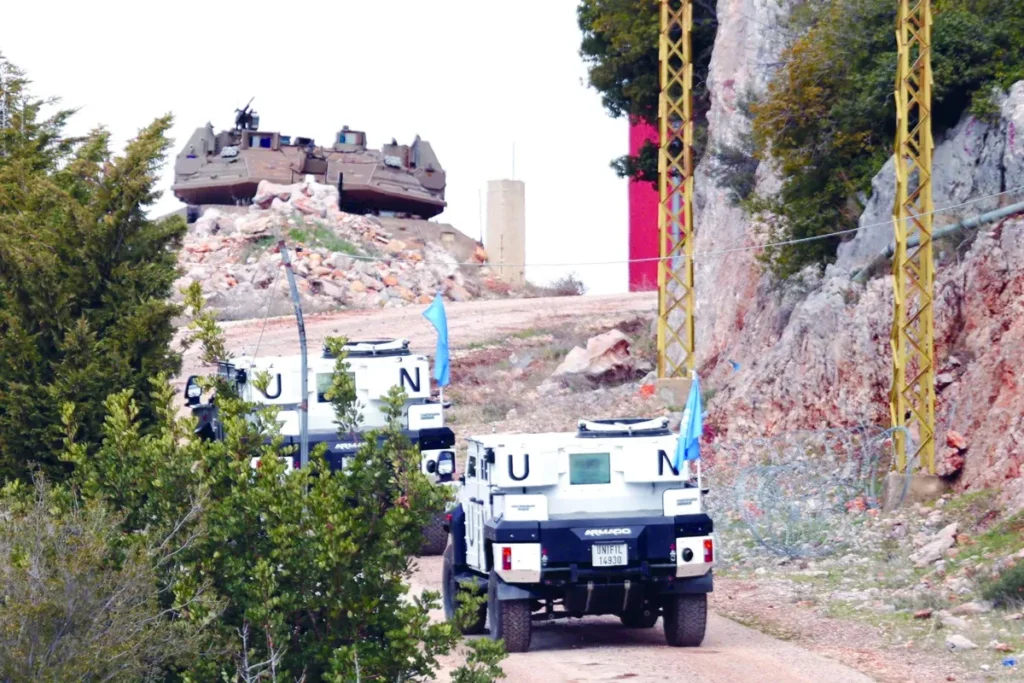
In an analytical report, Asharq Al-Awsat newspaper writes that the unwritten rules of engagement between Israel and Hezbollah established after the July 2006 war have collapsed following the recent conflict, replaced by a new paradigm. This model is based on establishing a fire-buffer zone, Israeli military freedom of action, preemptive strikes, and efforts to destroy Hezbollah's capabilities before they can be utilised. The newspaper states that the conflict on Lebanon's southern front is now managed continuously through military initiative and the imposition of field realities, rather than being contained to prevent a broader war. According to Asharq Al-Awsat, the roots of the previous rules extended beyond the 2006 war to the April 1996 understanding following Operation Grapes of Wrath. Retired Major General Abdul Rahman Sheaitli told the newspaper that during that period, targeting was largely restricted to military personnel, and attacks on civilians met with a similar response. Following the 2006 war, Hezbollah's operations were mostly confined to occupied areas, particularly the Shebaa Farms, and responses to Israeli assassinations largely took place within this framework to prevent the conflict from escalating into a full-scale war. Sheaitli emphasised that the post-2006 period was not peace, but a phase of precise conflict management. In accordance with UN Security Council Resolution 1701, Hezbollah withdrew its heavy and rocket weapons from south of the Litani River, but Israel and Hezbollah simultaneously prepared for the next confrontation while monitoring each other's movements. During this period, an unannounced deterrence emerged, whereby a major escalation would be met with a major response. Equations such as Beirut versus Tel Aviv and Dahiyeh versus Haifa underscored the heavy cost of war for both parties. According to Sheaitli, UNIFIL forces, the Lebanese army, the Israeli military, and US mediations played an important role in containing limited incidents and preventing their expansion. Retired Brigadier General Bahaa Halal stated that the collapse of this mechanism was not the result of a single factor, but rather five main developments: the changing regional environment after the 7 October 2023 attack, the Lebanese front's entry into a war of attrition, the expanded use of precision drones, an unprecedented advancement in Israeli intelligence capabilities, and the diminished effectiveness of traditional deterrence due to ongoing military operations. Halal said that instead of merely responding to an attack, Israel has focused on continuous monitoring, target identification, preemptive strikes, and preventing the rebuilding of Hezbollah's military capabilities. Halal outlined five new rules for the post-war operational environment: creating a fire-buffer zone through drones, reconnaissance, and airstrikes; expanding Israel's freedom of action in Lebanese territory to prevent the stockpiling of military capabilities; field control through the immediate detection and targeting of objectives; justifying attacks based on potential threats rather than actual ones; and employing limited tactical responses for rapid tension containment rather than broad strategic retaliation. He noted that the center of gravity in the conflict has shifted from a balance of power to a balance of intelligence, and deterrence now relies not only on the threat of punishment but also on depriving the adversary of the ability to act. Retired Brigadier General Fadi Daoud told Asharq Al-Awsat that the recent war has altered not only the rules of engagement but the very nature of warfare itself. According to him, Israel has moved from mutual deterrence to a strategy of imposing field rules backed by its military and technological superiority, while Hezbollah seeks to prevent total collapse and preserve some of its remaining capabilities. Daoud outlined five shifts: the replacement of mutual deterrence with fire control; the end of the post-2006 no-war, no-peace era and the start of continuous deep strikes; the transition from a relatively symmetrical confrontation to an asymmetrical war centered on drones, technology, and precision strikes; the transformation of Hezbollah's deterrence from immediate retaliation to delayed attrition deterrence; and the conversion of a ceasefire from a practical halt in operations into a political framework that may persist alongside ongoing field attacks. Asharq Al-Awsat concluded that between the 2006 and 2026 wars, the Lebanon-Israel front has shifted from a mutually restrictive balance to the permanent management of escalation and Israeli operational supremacy.