
Strait of Hormuz closure drives up Gulf import and export costs
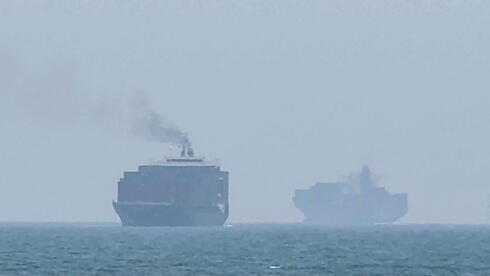
The effective closure of the Strait of Hormuz since March has significantly increased the cost of transporting goods and energy across the Gulf, highlighting the region's economic dependence on this vital waterway. Qatar, Kuwait, and Bahrain lack direct alternatives for the bulk of their energy exports, while essential food and consumer goods—previously imported by sea—are now being diverted to air freight or longer land routes. Before the conflict, the Strait, located between Iran and Oman, handled approximately one-fifth of the world's oil and gas. Iranian officials stated on Saturday that negotiations with Oman regarding a new shipping route are nearing completion, though they warned this does not signify a full reopening of the waterway. Mohamed Shady, head of energy and logistics at the Al-Habtoor Research Centre in Dubai, told The Media Line that the Strait remains the primary economic channel for the global economy, particularly for Asian and European importers. He noted that the United States, as a net energy exporter, has been less affected by price surges, whereas countries trading with the Gulf have borne the brunt of the disruption. Sean Heath, a professor of business administration at the University of Southern California’s Marshall School of Business, noted that the majority of food and essential goods for Kuwait, the UAE, Bahrain, Qatar, and Saudi Arabia arrive by sea. He explained that the emergency shift to air freight has driven inflation in these nations, even as public reports focus primarily on oil-related consequences. While air transport is viable for high-value, low-volume goods like medicine and electronics, it cannot accommodate the scale of grain or construction materials required. Shipping companies implemented 'emergency surcharges' within weeks of the crisis. Maersk applied these fees to cargo moving through the UAE, Qatar, Saudi Arabia, Bahrain, Kuwait, Iraq, and Oman, with other firms following suit within 48 hours. Meanwhile, the Omani port of Sohar, located outside the Strait, has seen a 40% increase in vessel traffic and a 55% rise in cargo capacity, according to Oman’s Ministry of Transport, Communications and Information Technology. Attacks on energy infrastructure have further strained exports. The Abu Dhabi National Oil Company reported last week that 15 of its vessels have been targeted by missiles and drones since the conflict began, resulting in one death and 20 injuries. Another vessel was targeted on Saturday. Qatar lost approximately 17% of its natural gas export capacity following Iranian missile strikes on the Ras Laffan facility in March, and two loaded tankers from the site have been attacked at sea since July. A March study by the Kiel Institute for the World Economy warned that disruptions to Gulf gas exports could impact global agriculture and food prices by reducing the production of fertilisers and chemicals. Saudi Arabia and Oman were excluded from the study's worst-case scenarios due to their ports located outside the Strait. Conversely, Qatar, Kuwait, and Bahrain lack such access and cannot bypass the Strait via pipeline. Oxford Economics Middle East has raised its 2026 inflation forecasts for all six Gulf Cooperation Council (GCC) countries. Bahrain’s inflation forecast rose by nearly one percentage point to 2.1%. Scott Livermore, the firm's chief Middle East economist, noted that the closure has hindered imports, with alternative land and air routes proving more expensive. However, he suggested that declining rents might partially offset these pressures. On Sunday, Houthi rebels in Yemen claimed a drone attack on the Aramco refinery in Jazan, on the Red Sea coast. The Saudi Ministry of Energy confirmed that firefighters extinguished the blaze with no casualties, though they did not specify the cause. The facility was previously targeted in late July. Reports also indicated attacks on the Saudi crude oil pipeline to Yanbu—one of the few routes that bypasses the Strait of Hormuz—following a June ceasefire. Kaveri Ganapathy, a climate and energy researcher at the ORF Middle East Institute in Dubai, stated that the closure has complicated, yet underscored the necessity of, India’s planned trade route to Europe via the Gulf. She told The Media Line that the India-Middle East-Europe Economic Corridor (IMEC) could provide essential redundancy, though the final route may differ from initial plans. Ganapathy identified Kuwait, Bahrain, and Iraq as the most vulnerable nations due to their limited alternatives. Mustafa Ahmed, head of political and security studies at the Al-Habtoor Centre, warned that while Washington will continue to assert the international status of the Strait, the reality is that Iran maintains control. He cautioned that if the current negotiations result in a lasting agreement, the Strait could transition from a protected global trade artery into a permanent bargaining lever, significantly undermining US maritime deterrence. Gulf nations are now preparing for future disruptions. A 1,700-kilometre railway connecting the six GCC countries is more than half complete and is scheduled to be fully operational by December 2030. A 238-kilometre rail link connecting the UAE to Oman’s Sohar port is also 40% complete. PwC noted in May that rail infrastructure is now as critical as pipelines to ensure the movement of exports and food imports. The resumption of shipping will ultimately depend on shipowners and insurers. Heath remarked that if he were on the board of a tanker company, he would monitor the passage of Chinese-flagged vessels first, then wait a week before sending a non-Chinese ship, as no one wants to be the first to enter the Strait after a reopening. This report was prepared by Jacob Wirtschafter and republished by The Media Line with permission.