

Lebanese Parliament votes to abolish death penalty
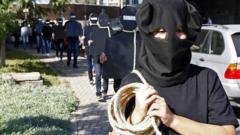
The Lebanese Parliament voted by a majority on Tuesday to abolish the death penalty. If finalised, the move would make Lebanon the first country in the Middle East to officially abandon capital punishment. The Hezbollah parliamentary bloc opposed the measure. The bill now moves to the cabinet for review and approval, before being sent to President Joseph Aoun for his signature. The government has previously expressed support for abolition. Lebanon has not carried out an execution since January 2004, though courts have continued to issue death sentences. Human rights groups estimate that more than 78 people remain on death row. Under the new legislation, the death penalty would be replaced by life imprisonment with hard labour. However, the text of the bill has yet to specify the implementation details for this sentence. While hard labour is already provided for in Lebanese law, it has been rarely enforced in recent years, as the financial crisis and prison overcrowding have limited the government's resources and operational capacity. The vote follows years of campaigning by civil society groups and lawyers. Ouraguit Younan, a co-founder of the Lebanese Association for Civil Rights who has campaigned for three decades, told the BBC: "We cannot solve a crime with another crime or end violence with violence." Younan added: "We are at war and people are being killed every day; therefore, even in such circumstances, we can fight for human rights and win. We can be a model for others." The vote follows more than two decades of a de facto moratorium on executions. Under Lebanese law, an execution required a decree signed by the President, the Prime Minister, and the Minister of Justice, but no such decree has been issued since 2004. Previously, the death penalty was applicable for crimes including aggravated murder, certain terrorist offences resulting in death, treason, espionage, and crimes against state security. Previous attempts to abolish it, including a 2004 parliamentary bill and a 2008 Ministry of Justice proposal, were unsuccessful. This development comes as the use of the death penalty remains contentious elsewhere in the Middle East. Jordan resumed executions in June, marking the first such instance since 2017. In Israel, the Knesset passed a law in May allowing for the expansion of capital punishment, specifically for individuals involved in the Hamas-led attacks and hostage-taking of October 2023. Meanwhile, UN High Commissioner for Human Rights Volker Türk has expressed concern over rising executions in Iran, noting that at least 56 people have been executed on national security-related charges since 19 March, including 27 linked to anti-government protests.