

Deadly Nepal flood highlights glacier risks in warming Himalayas
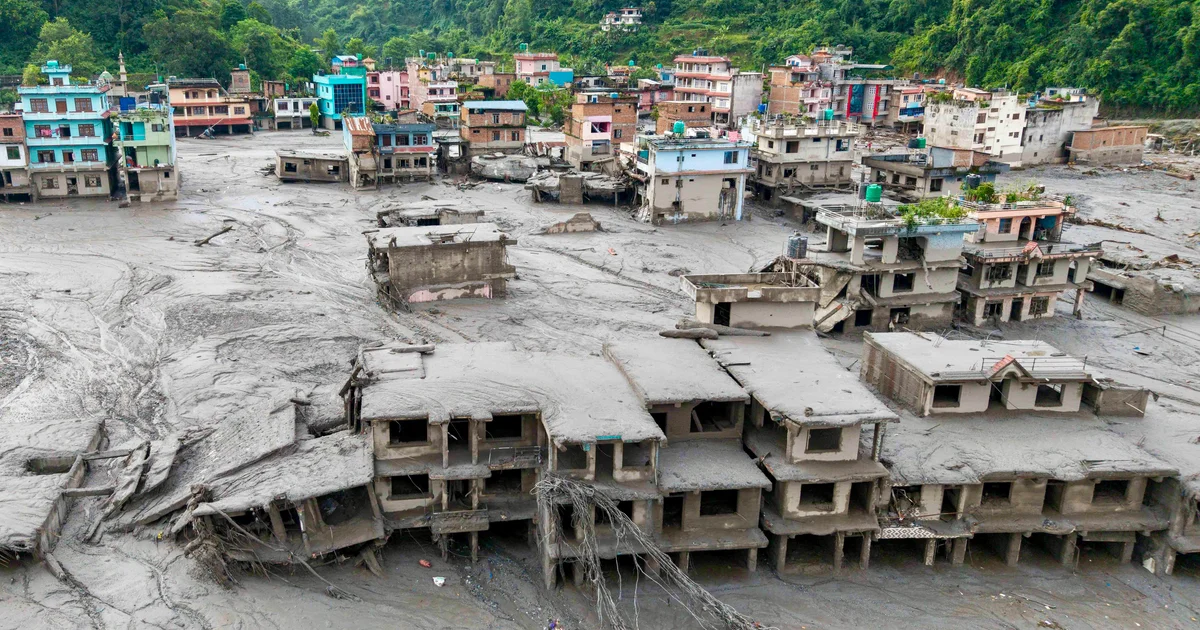
Preliminary investigations suggest that Wednesday's deadly flash flood in Nepal was likely triggered by a massive chunk of a glacier breaking off, which temporarily dammed a river before surging downstream with catastrophic force. The U.S. Geological Survey reported a magnitude 5.2 glacial collapse, sending debris flowing into communities. Jakob Steiner, a geoscientist at the University of Graz, described the event as if someone had cut through the lower part of the glacier with a huge knife, noting that the impact of the falling ice mass would have sounded like an exploding bomb.
While scientists caution that it is too early to draw a direct link between this specific catastrophe and global warming, they warn that rising temperatures driven by human activity are increasing the frequency of such disasters. The Hindu Kush Himalaya region, which serves as the water source for 12 rivers supporting 1.65 billion people, is warming significantly faster than many other parts of the world.
Reports indicate that water levels in affected rivers rose by as much as 9 meters in just 30 minutes, causing extensive damage to critical infrastructure, including hydropower dams, roads, and bridges. Saswat Sanyal, a disaster risk reduction specialist, described the surge as a sudden and massive event, noting that such cascading hazards—where glacial collapse leads to debris flow and flooding—are becoming the new normal.
Experts point out that the rate of glacial ice loss has doubled since 2000, leading to the expansion of glacial lakes and the destabilization of mountain slopes as permafrost thaws. Despite a history of similar hazards in the region, critics argue that governments have failed to implement adequate early warning systems or coordinate effectively to protect residents and visitors from these increasing risks.